Written and Read

Archive for the ‘Literate Lifestyle’ Category

Broken Sea – a fanfic site

without comments

 A new addition to my original audiobook article, I would like to mention Broken Sea.

This site is dedicated to fan fiction, the genre where the author sets the story in an established universe. An example of this is A Different Point of View, a serialised audiobook from the viewpoint of a Star Wars stormtrooper.
This is a contested issue from time to time because of the copyright issues, but here we have Broken Sea, a site apparently dedicated to a wide range of fan fiction.
I have not listened to all of it, for several reasons. First, there is an insane amount of audio, they have really been hugely productive. But also, the authors set some of the stories on the background of shows I have never heard of. An example is Logan’s Run, a show a lot people have said good things about, but I have no idea…
What I can say is that I have listened to the Dr. Who show, and that is very well done. While I only really got into the Tom Baker version of the Doctor, I liked the show, and this audio show certainly fits well in that atmosphere.
Another show I caught was Gaia, a show set in the Star Trek universe. Of course, one would expect to find Trekkies on a site like this… the show is well-written and well-performed, and I find that the characters are quite balanced and interestingly diverse. Gaia is a zoo ship working as a sort of ark to prevent ecological disaster wiping out the Earth species, a situation the Earth has recently been recovering from.
While I have not had time to listen to the others yet, I noted Battlestar GalacticaX-filesTwilight Zone and Planet of the Apes. Already with this list – about half of the shows – I would have enough audio to last me for a very long time,  even if I took a break from podcasts.

Written by mjjzf

August 14th, 2011 at 8:25 am

Posted in Literate Lifestyle

Ken Robinson: Do Schools kill Creativity

without comments

I recently came across this TED Talk, in which Ken Robinson brings some very insightful comments on the focus of schools and the potential pitfalls of focusing on a limited and limiting view on intelligence, knowledge and learning.

Written by mjjzf

May 9th, 2011 at 12:16 pm

Audiobooks – a beginner selection

with one comment

Part of the point of this website – though it may not be as obvious as it was at the beginning – is to discuss literature.
While I have recently had my books on the Russian Liberation Movement returned to me, making this an obvious topic for a future article, there is another thing I have been thinking about doing a feature on.

I started listening to audiobooks when I had a dog. This may seem a curious result, but our dog Pushkin (every literary reference intended) got me walking ten miles a day, and it gets old… at the time I was listening to podcasts like Lugradio and Linux Reality, and Chess Griffin did a Linux Reality episode where he mentioned podiobooks – serialized audiobooks.. I listened to a couple of them – 7th Son by J. C. Hutchins and the outstanding and extremely creepy sci-fi horror story Crescent by Phil Rossi – and have been doing it ever since.
When I was a teenager, I briefly looked into audiobooks and… hated them. At the time, I was entirely unable to deal with the fact that they ran at a pace different from my reading speed. Also, I suspect that this was because the people reading the audiobooks were talking… very… slowly… and… without… variation…
So that wasn’t a winner.. But it has changed. Partly because a book like Crescent has good effects and a narrative style that will keep my attention.

I get the impression that people are getting more into it, along with the popularity of podcasts. I actually see audiobook CDs in the stores nowadays, a sure sign of the time. I suspect this is partially because nearly everyone has an audio player available these days. Even a fairly cheap phone like my Elm has a decent MP3 player and 2 Gigs of storage built in.

But where to start? Well, I have a solid selection. I’ll show you.

Detective stories

From the thriller-plus-entertainment department: Black Jack Justice is a classic hard-boiled, banter-centric series of episodes, where each episode is a finished story.
Jack and his girl detective sidekick Trixie Dixon and a gallery of entertainingly stereotypical characters work their way their way through their cases, aided and obstructed by cops and crooks alike. If you are into old sleuth movies, you will want to listen to these.
Also, they are a good introduction to audiobooks, because they are finished segments, well-read and with good effects.

Though other themes are involved here – but genre mix is probably the case with independent publication more often than mainstream -  Billibub Baddings and the Case of the Singing Sword is another detective novel set in Chicago in the thirties. Billibub is a dwarf warrior magically transported from his own Tolkien-style universe, ending up in Chicago. After getting his bearings, he starts his own detective agency. The story is a curious mash-up of Billibub’s reflections mixed in with experience from his old world – as in battle axes and elvish ladies – but Tee Morris also manages to wrangle a real detective novel out of it.
The story is published as a podiobook, i.e. a series of recorded chapters.

Sci-Fi and variations

Jake Bible’s Dead Mech is a potent action-packed sci-fi horror novel. The population has been decimated by a zombie infestation. As a result, soldiers go out in giant mechs to fight the zombies, and with good results; however, when a pilot dies in his mech, you suddenly have a zombie mech… and that’s a different story.
If you can’t stand blood and gore, don’t consider this one. If you don’t mind and can take the soldier jargon, this one is for you. You certainly won’t be bored.

It is hard to get around published and bestselling Scott Sigler (more of him in this article) when talking about audio- and particularly Podiobooks. I would actually recommend listening to all of it, but a good place to start is Earthcore. He is tough and talented.

One of the most well-known and appreciated audiobooks ever must be the 7th Son books by J. C. Hutchins. After the assassination of the US president, a group of people with very different backgrounds are captured and brought together, and it is revealed to them that they are actually clones – that their childhood memories are not actually their own, but belonging to the original person, John Alpha, from whom they are cloned – and who has now gone rogue. He is behind the murder of the president and with plans for considerably worse acts.

Action/Thriller

Mark Yoshimoto Nemcoff won a Parsec Award – the award of excellence in the field of audiobooks/Podiobooks – for his high-paced thriller Number One with a Bullet. In this story, retired hitman Johnny Dane is drawn into a contest setting the world’s best assassins against each other with a group of very wealthy men betting on the outcome.
Nemcoff tells the story with great voices and ever-changing pace.

In his podiobook 65 Below, Basil Sands takes us to Alaska. Retired Marine Marcus Orlando Johnson is confronted with a complex plot for a terrorist plan to unleash an extremely potent biological weapon.
A well-told story with good characters. While this is my favorite Basil Sands book, consider also listening to his Faithful Warrior.

Horror

I have to say, I would never have expected an audiobook to be scary. I also have to say that Crescent by Phil Rossi had my skin crawling. I often listen to these books while doing something else, but this one had me stopping to listen. The story takes place on Crescent Station. This is a story in space, but there are bad things even there, lurking in the night, wanting to chew on your flesh…
There are good… as in effective… effects in this story. Don’t listen to this if you have a heart condition, but if you like a good horror story, go for this one.

Steampunk

Only one recommendation for this category, but a strong one. The Gearheart by Alex White introduces the Seekers, a mysterious order merging mechanics and magic. There is spying and deceit, there are mechanical beings, there are intricate mechanical devices kept running by magical glyphs signed by magician mechanics. Very pure steampunk. Certain things – particularly the order of the Seekers – reminded me of the universe portrayed in the incredibly immersive (and addictive, if it is your thing) video game series Thief.
It is worth taking a look at the interview with Alex White at The Traveler’s Steampunk Blog. He has done the voices – an impressive array of distinctive voices – with his wife, and he has composed and played the featured music himself.
Note that there is also a sequel, Maiden Flight of the Avenger; I recommend listening to The Gearheart first.

Fan fiction

A new addition to the original article, I would like to mention Broken Sea.
This site is dedicated to fan fiction, the genre where the author sets the story in an established universe. An example of this is A Different Point of View, a serialised audiobook from the viewpoint of a Star Wars stormtrooper.
This is a contested issue from time to time because of the copyright issues, but here we have Broken Sea, a site apparently dedicated to a wide range of fan fiction.
I have not listened to all of it, for several reasons. First, there is an insane amount of audio, they have really been hugely productive. But also, the authors set some of the stories on the background of shows I have never heard of. An example is Logan’s Run, a show a lot people have said good things about, but I have no idea…
What I can say is that I have listened to the Dr. Who show, and that is very well done. While I only really got into the Tom Baker version of the Doctor, I liked the show, and this audio show certainly fits well in that atmosphere.
Another show I caught was Gaia, a show set in the Star Trek universe. Of course, one would expect to find Trekkies on a site like this… the show is well-written and well-performed, and I find that the characters are quite balanced and interestingly diverse. Gaia is a zoo ship working as a sort of ark to prevent ecological disaster wiping out the Earth species, a situation the Earth has recently been recovering from.
While I have not had time to listen to the others yet, I noted Battlestar Galactica, X-files, Twilight Zone and Planet of the Apes. Already with this list – about half of the shows – I would have enough audio to last me for a very long time,  even if I took a break from podcasts.
I will update this section when I have listened to more of the shows.

I should not neglect to say: These deeply talented people have made these stories available to us. Consider giving them a contribution. Most of them have versions of their works for sale, sometimes in print, sometimes ebooks, sometimes higher-quality recordings.


Written by mjjzf

May 4th, 2011 at 2:15 am

Posted in Literate Lifestyle

The unrespecting gentleman

without comments

I feel it is in its place to comment on the Open Respect initiative by Jono Bacon, because I believe that Jono has all the right intentions – but there are some concepts in this which are problematic.
The essence of Open Respect is to encourage an exchange of ideas and opinions in, to quote, a respectful manner.

First, Jono’s statement:

  • Respect is not judging people based upon their genetic or social attributes, but instead the quality and content of their discourse.
  • Respect is not just civility in communication, but also respecting other people for making their own choices, even if you disagree with them.
  • Respect is sharing opinions so a mutual understanding of principles is understood, but then giving others the freedom to pursue their own paths without fear of persecution by those who have made different decisions or have different definitions of freedom and openness.
  • Respect is engaging in honest, open and polite debate with the goal of enriching each others perspectives, not for the purpose of proving each wrong.
  • Respect is understanding that others often pour their heart and souls into their work, and being sensitive of this emotional connection to their work, particularly in times of critique

Source: OpenRespect.org

Now, the issue he is addressing here and in a previous blog post is as old as debate itself, but is perhaps – probably – aggravated by the internet troll mentality, the online literary equivalent of road rage; some issues simply inflame people. Many reasons for this, and I could discuss that as well and get flamed to a crisp.
Part of what makes this particular initiative problematic is that respect is actually ambiguous, as is made clear in the responses to his blogpost. An example of this is a comment by Fab, known by listeners of the Linux Outlaws podcast; Fab comments that in his view, respect is something you earn. And I dare say that when Jono uses the term, he talks about respectful behavior in the sense of politeness. What he does not address is the fact that people who do not have a civil tone in a debate, online or personally, simply do not respect the person they talk to. As in, they feel a personal disrespect for the person they are debating with.

Frankly, I hear a lot of voices on the net – people I simply do not have any respect for. People I think are wrong in their interpretations, naïve in their views and repulsive in their morals. But what is that to me? It is, of course, the dilemma of a gentleman that one of the most uncivilized things to do is telling people they are impolite.

When there is a debate, criticizing people has nothing to do with respect, and I find it clutters things to bring that up. I write this piece to say that Jono is going about this the wrong way – partly because I believe such an initiative is futile, whatever the intentions, partly because I find his choice of title unfortunate – but at the same time, I have a personal respect for Jono for the work with Lugradio and for doing his Severed Fifth project to draw some conclusions about the strength of Creative Commons and the community around his music. And so, a critique would be the decent thing to do, because that is part of the debate.

It is, of course, a question of basic decency. It is a question of addressing a debate in a civilized fashion. I would want to do so to people I hold in great esteem, and I would want to do so with people in whom I find little to respect. In the end, it is a question of respect – for yourself. And one would do well to consider when a debate is actually needed; often enough, these debates can look like the unstoppable heading towards the immovable with no sort of agreement on the horizon except, in the very best of cases, agreeing to disagree.

And why do I find the futile? Consider a sign beside a trashcan saying “Please put trash in the trashcan”. My old workplace was always cluttered with such signs until I tore them all down. Those who will be civilized about it will be civilized about it – is a sign going to make any difference to the others? I feel that Jono has made a digital signpost trying to ask people not to be unpleasant. The results are predictable.

Written by mjjzf

November 20th, 2010 at 8:18 am

Nathan Lowell: The Golden Age of the Solar Clipper

with 2 comments

Dear Nathan Lowell,

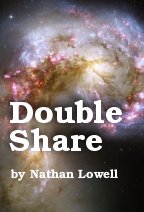
I just listened again to your Golden Age of the Solar Clipper books – Quarter Share, Half Share, Full Share, Double Share and Captain’s Share.

Although they are no longer new to me, they still grab me as great stories; the life of Ishmael Wang from the death of his mother, setting out as a sailor in space and up until his becoming a captain is quite the epic tale.
Though it takes place in space, the references to seafaring and the parallels to stories like Forester’s Hornblower books make Ishmael’s story fit into a genre with a proud history.

It is inspirational in the sense that Ishmael’s desire to bring out the best in everyone and to encourage everyone to seek their full potential makes for developments in the story – and which everyone can take to heart. Your frequent emphasis on the kind of ideas which aren’t complex but which people just never thought of should make any reader and listener look closer at their situation and surroundings before accepting the situation as it is. This comes out very well in the sections where he deals with trading, and when he advances, how he seeks to acommodate the crew. It is also a good idea to emphasize the way people’s complaints don’t always echo their problems.

So, to make a long story short(er), I am writing to thank you for these well-written books; and since I got to know them as audiobooks from Podiobooks.com – particularly inspired by the mentions on the Linux Reality Podcast and your interview with Chess Griffin – I should also say that you have an excellent storytelling voice.
Your last two books were chosen as Founders’ Choice on Podiobooks, and I noted you were a finalist last year at the Parsec Awards with Double Share – and once again nominated with Captain’s Share. I wish you all the best with that, and although the submissions have you up against authors like Phil Rossi with both Harvey and Eden, Alex White with the very interesting The Gearheart and a fresh make of Hutchins’ 7th Son: Descent, you are a strong candidate to take this one home.

The only story I didn’t yet get back to this time was your spin-off story South Coast. It has yet to get on my audio player – but it is going in there.

Yours,

Morten Juhl-Johansen Zölde-Fejér

Written by mjjzf

May 27th, 2010 at 10:41 pm

Posted in Literate Lifestyle

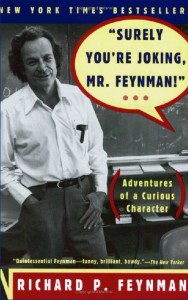
Surely You’re Joking, Mr. Feynman

without comments

A mix of genres today, though that may be what you have come to expect around here; part literature, part science.

Lately, I have been reading Surely You’re Joking, Mr. Feynman, the autobiography of the physicist Richard P. Feynman – in the sense Feynman told the stories, and Ralph Leighton wrote them down. This book has been on our shelves for quite some time, as I gave it as a Christmas present to my wife a couple of years ago along with a biography on Albert Einstein (did I mention that our son recognizes Albert Einstein?). The dog ate the Einstein biography (true story), but spared Mr. Feynman.

There are a couple of themes that keep recurring. Curiosity is one – Feynman’s desire to explore the world is this incredible hunger that puts him in the most peculiar situations. I resist the temptation to list all of the examples, because part of what makes the book interesting is the way you can never really tell where it goes next. I will say this, though: He seems to apply a scientific method to the world around him. The very first chapter tells about young Richard falling in love with fixing radios. His enthusiasm is apparent from the first paragraph of the book:

When I was about eleven or twelve I set up a lab in my house. It consisted of an old wooden packing box that I put shelves in.

He goes on to telling about how he would set up a lamp bank in his laboratory, playing with bulbs in serial or parallel connection and making switch systems.

Also, from the start, Feynman is quite a trickster and almost gets into trouble. His electrical experiments set off a small fire in the house, which he manages to hide from the parents. He discovers that his radio will pick up a radio channel with a show all the children listen to – an hour before they usually listen to it! And he will join them afterwards to make clever comments about what next to expect in the plot… and the first thing he describes from his time at MIT is stealing a door and hiding it; later, he finds out how to open the safes at Los Alamos to demonstrate their inadequate security – an amusing parallel to how Steven Levy describes in his classic book Hackers the later practice at MIT of picking the locks because everyone should have access to information, and a computer shouldn’t stand around without being used – and of course, the similarity is that it is not just a practical consideration, but also a brain game. A challenge that, once encountered, can only be met and resolved accordingly.

He describes a difficult youth. Even when he gets older, he has his problems with women. At MIT, he puts great thought into the right way to just walk past the girls. And, of course, the physical awkwardness that seems associated with the natural sciences – often discarded as prejudice, and yet repeatedly confirmed – is summed up in a side comment on sports:

I was never any good in sports. I was always terrified if a tennis ball would come over the fence and land near me, because I never could get it across the fence-it usually went about a radian off of where it was supposed to go.

This actually makes for an interesting contrast and again, a good reason for reading this book: In most of what Feynman comments on in the book, he is confident bordering on (and sometimes beyond) cocky, but he is also extremely honest about his weaknesses and fears as a human being, which makes the book a very personal and charming read. As he describes how he conquers his challenges, he mixes some rare insights with a human story. He does get married, but his first wife dies from tuberculosis in 1945 while he is working at Los Alamos, and this chapter is very personal. He marries a second time in 1952.

This honesty is a recurring feature as well. He descibes being in Brazil to teach, and he encounters an interesting phenomenon: That the students on the face of it seem to know the curriculum completely, that the questions they are asked are answered in full – but when he starts asking them questions with scenarios, it turns out that they do not know the answers; and he discovers that they memorise everything without actually understanding it! And that is how they perceive learning. Of course, he tries to promote the inquisitive mind, genuine curiosity and debate about the topics, but it turns out that each student is so deeply trained in never admitting doubts, confusion or mistakes that the idea of a study group is discarded beforehand.
Feynman spends a lot of time on this, and he never fails to stress that it is his curiosity, his need to understand, that has brought him far and will bring him further – and being honest about what he doesn’t understand, and what is not yet understood in general, is a necessary part of that.

For the same reasons, he comes across as rather harsh when he is asked to be on the board reviewing schoolbooks. Not only does it very soon become clear that the other reviewers are barely skimming the books in question before giving their recommendation, it is also clear that the books are of an appalling quality and completely unfit for, you guessed it: Stimulating curiosity and creativity. He also rages against the politics of it: When one of the publishers offering the books at an earlier date, another does the same – and at a reduced rate! So, Feynman concludes, it seems that when you push the timeframe, the books become cheaper as well!

There is one interesting point where it is clear that Feynman is a product of his time. I have already mentioned Los Alamos, so perhaps you know – he participated in research for the army during the 2nd World War and cold war that followed – and actively encouraged his fellow scientists to do the same. As a result, he takes part in the research in nuclear weapons as a patriotic duty and is present at the nuclear detonation of the Manhattan project. While his personal opinion seems to go a bit back and forth on this, this biography contributes an interesting personal portrait of people like Oppenheimer who were involved in this research, and whom history has not only been kind to. There is also an interesting description of the clash of cultures between the army way and the academic approach.

Feynman’s curiosity is expressed in a different form – namely, his eagerness to examine other areas. In Princeton, he visits classes of other fields like biology and philosophy. In a series of discussions with a friend, an artist, he concludes that their lack of agreement is based on the fact that the artist does not know science, and he himself does not know art. So he sets out to learn drawing – and learns it with the help of his friend, and also painting – and suddenly he has a small business on the side selling paintings!
His interest in music also comes across – he learns to play drums quite well during his time in Brazil and gets to play with local bands; this also earns him some interesting friendships over time after he comes back to the States. In the time before he goes to Brazil, he learns Portugese, and spending some time in Japan, he learns some Japanese. Confronted with the riddle of Mayan hieroglyphs, he goes into deciphering an archeological find, a Mayan calendar.

I could say that Richard Feynman eventually ends up winning the Nobel Prize, but that would not be fair. While he certainly finds the discoveries that earn him the prize important and fascinating, the prize is of less interest to him and does cause him to get more attention than he wants and, one might say, the wrong kind of attention: The attention you get because you are a Nobel Prize laureate, not because you are an interesting or otherwise relevant person. As you will see, this rubbed against his view of the world.

This book was first published in 1985, a few years before his death in February 1988, and in the time after his death, what I find about him is mostly his literature, the materials he has written for teaching and, indeed, popularizing physics, and he is said to have been especially proud of being awarded the Oersted Medal for notable contributions to the teaching of physics.

The book is partly educational for the scientific content, the historical description of how certain discoveries came about, interesting portraits of great scientists – and partly a human story of an occasionally very shy and occasionally very extroverted, but always inquisitive person.

Bibliographic references are available from the Open Library page on this book.

Written by mjjzf

April 8th, 2010 at 3:59 am

Allison Hoover Bartlett: The man who loved books too much

without comments

An interesting item this time: The man who loved books too much by Allison Hoover Bartlett.

This book is not something I would usually have picked up, and I did in fact buy it thinking it would be something else. Whereas I was expecting a thriller, it is actually more of a documentary on the book collection industry.

It is the story of a book thief, Charles Gilkey. The author tells the story of the hunt for Charles Gilkey and the man who has caught him, Ken Sanders.
Besides the obvious – the hunt for a criminal – what makes the book interesting is the fact that Mrs. Bartlett does extensive interviews over time with Gilkey, Sanders and others in the book collecting business. This yields some interesting insights.
For one thing, Gilkey is not actually a reader, and this seems to be the case with a lot of the book collectors. He is much more interested in owning the objects, much as one would want a sculpture or a painting. And of course, since the value of these items is huge, one would never actually touch them. Several of the book collectors interviewed in the book talk about having their collection and reading books… but of course, not reading the collection books, for they are for safekeeping.

Ken Sanders is elected the security chair of ABAA, Antiquarian Booksellers’ Association of America. In this capacity, he receives and distributes warnings about scammers and thieves. Selling collectors’ items in this business would be as complicated as unloading a stolen race horse or the Mona Lisa, if not for the fact that the booksellers seem to be extremely private with their information, and a lot of Sanders’ efforts go into lobbying the business to share their experiences about the people ripping them off.
Interestingly, Sanders comments on the fact that it is a challenge to make the police take this kind of crime seriously, even if the value of the first edition of a classic can get extremely high.

Gilkey’s personality adds a lot of flavor to the story. A man with a well-behaved and cultured appearance, he manages to cheat the booksellers out of works of a considerable value. A little way into the story, he is caught, imprisoned, released – and goes back to stealing books again! Over time as the author talks to Gilkey, he seems increasingly insistent that life owes him. Whenever he is arrested, put in prison or just slowed down by events, he feels that life owes him another success. And so, he goes at it again.

It seems clear that Allison Hoover Bartlett start out trying to find out how this collectors’ mentality actually works; and while going into this, she not only comes across some fascinatingly bizarre/bizarrely fascinating personalities, but also gets into the business in such a way that she can’t help exploring it more deeply. The book is a spinoff of an award-winning magazine article, which she decided to expand upon.

Sometimes I feel a poor book critic for insisting on writing about books that I like. I have, in fact, finished a lot of books that I don’t like – with a few exceptions (yes, Jean Auel, I am looking at you here). I am the kind of reader who keeps going, because a lot of books start out slowly and gradually gain speed or the author feels that the right approach is to (very) gradually home in on the main theme, and if that takes the first 100 pages, well, so be it. What this also sometimes means is that you will keep going, hoping for more… and keep going… and hoping… and the book ends. So be it. But I can’t be bothered to write about those, in part because it depresses me, and in part because there is no reason to emphasize the negative when I can just as well praise those who deserve it.
And so, to make a long story short(er): I rather like this book. I am sure that the ‘I’ form will annoy a lot of readers deeply, as recently discussed on the Litopia podcast – an author interviewing people, gathering the puzzle pieces of a story and then telling them from a first-person perspective, talking about the characters, but also about her own reactions: Fascination, doubt, frustration and just that little bit of collectors’ mania, which all the people she interviews have.
I quite like her personal approach, and I recommend the book to those who have accumulated a lot of books as readers and are just a little bit curious about the darker side of collecting.

Bibliographic references are available from the Open Library page on this book.

Written by mjjzf

March 8th, 2010 at 8:02 pm

Posted in Literate Lifestyle

The Russian Liberation Movement

without comments

The Russian liberation movement/The Russian liberation army (Русское Освободительное Движение/Русская Освободительная Армия) was a group of Soviet soldiers who fought on the side of Nazi Germany during World War II.
This is fairly well-documented. The interpretation, however, is not. The following is an entry I wrote for Citizendium – which was, of course, immediately criticised as an interpretation and debate material rather than an encyclopedia entry – and of course there was a request for documentation, leading into yet another discussion about original research – and I could hardly to my Danish BA thesis for documentation.
Anyway you slice it, there is certainly a place for it here.

Declared foundation of the Russian liberation movement:
Proponent angle

A large group of Soviet soldiers wanted to fight for the liberation of Russia or the nations of the Soviet Union from the existing system lead by Iosif Stalin.
An opportunity to achieve this goal was presented with the German invasion. In June 1942, leaflets encouraging Soviet soldiers to lay down their arms and welcome Adolf Hitler as the liberator were dropped at the front and in the areas being occupied. As a counter-move, the Soviet leadership attempted to paint a picture of the German as an evil enemy – the Germans, who were allies a short time ago. As Soviet citizens were accustomed to reading between the lines in the official statements, this campaign made little impression on the population. Part of the Soviet soldiers and civilians had had contact with Germans in the 1st World War and could not match their personal impression with the one offered in official publications.
Also, this alliance gone sour produced another alliance with the former (and later) arch enemies Great Britain and USA. This strengthened the impression that the priorities of the Soviet leadership were not in reality what they were officially.
And so, there was an interest in an alliance with the German state. This because it was impossible to imagine that it could be the intention of German leadership to conquer and continually occupy all of the Soviet Union, due to its massive size – not to mention the experience with the Russian geography done by Napoleon. Ergo, it would be in the interest of Nazi Germany to cooperate with a group interested in creating an alliance, in which the Soviet Union – or Russia, depending on which interest group was consulted – would exist as a democratic republic – or, as some suggested, a monarchy again – which would be a supportive military and trade ally of Germany.
Germany was seen as a nation with positive associations, because it was part of a European traditionally shared cultural community. It also had a certain effect that it was a practising Christian society, as opposed to the Soviet Union, in which the state had made a substantial and rather heavy-handed effort to eliminate religious practice.
The figurehead of the movement was Lieutenant General Andrey Andreyevich Vlasov, a decorated war hero, who had made his way up through the ranks of the Red Army, based on merit. In the autobiography of one of the leaders of the Southern Front, responsible for the defence of Kiev – and later General Secretary Nikika S. Khrushchev, Vlasov is mentioned as an able commander.
After the defeat of his 2nd Shock Army in the summer of 1942, Vlasov is captured by German forces. He offers to fight in an established Russian liberation army.
While working on this, he stresses some good things with the Soviet system as opposed to Imperial Russia, but he also stresses that which is unacceptable in the new system – that the system is not, what it is pretending to be. The German army responded positively to the idea, but postponed taking full advantage of it due to the scepticism of the political leadership, based on ideological issues. Vlasov was allowed to travel to POW camps and occupied areas, where he presented his cause – which was popular, and the soldiers already active in the Wehrmacht, albeit not as part of a common coordinated force, started wearing the ROA insignia, as they saw themselves as part of a shared cause – a liberation army.

The Soviet official position:
Critical angle

A minor group of Soviet citizens cooperated with the German occupation force. The collaborators were either former prisoners of war or soldiers and civilians, who changed sides during the war.
Having surrendered to the invaders, the prisoners of war were already counted as traitors by Soviet definition, as these were considered people, who were not willing to make an effort and sacrifice to defend their country – who had let themselves get surrounded on the battlefield and taken the easy way out by surrendering instead of fighting to the end. Volunteering for the liberation movement after capture demonstrates their weakness, either by making the choice based on threats of physical abuse, or allowing themselves to be bribed with pay, food and relative freedom.
The soldiers and civilians, who changed sides, were perceived as cowards and opportunists in the same fashion, as people willing to sacrifice the future of their homeland to be on the (apparently) winning side, where it was possible to gain something for oneself. It was seen as typical for the kind of people who are weak and deceitful by nature – or as a variation of this, people who had lost land, fortune and privileges with the people’s revolution, well-off families and large-scale farmers (kulaki), who had no interest in the preservation of the Soviet Union. Vlasov had allowed the defeat of the 2nd Shock Army and surrendered to the German army in order to live comfortably and benefit. He, too, was a chameleon, who made his alliances, where he found a winning side. Upon capture, he let the Wehrmacht use him as a propaganda marionet, partly to weaken the moral of the soldiers of the Red Army, partly to keep the prisoners of war passive and partly to recruit troops, that could be used for various purposes of use to the Wehrmacht. This treason was compounded by the establishment of the Committee for the Liberation of the Peoples of Russia (KONR), where he not only let his German masters lead him, but actively took control in the campaign against his homeland.
The assumptions about Vlasov are confirmed by the circumstances around his capture by Soviet soldiers; he was captured on the way to the American sector, where he was found to be in possession of a large amount of money. This is interpreted as meaning that he had gained what he could and was searching for a new winning master – yet another capitalist state, which the USSR had allied with temporarily, but which should be treated with caution. During the final trial in 1946, he admitted to having lost heart, that he was offended by his country, and admitted to his treason. So, when he and his inner circle were hanged, they got the punishment which was to be expected and deserved for traitors of such a caliber.

References

There is a lot of material on the topic – as you may suspect from the view expressed above, it is a challenge to find balanced material on this.
I have found the following two to be the most comprehensive:

  • Catherine Andreyev: Vlasov and the Russian Liberation Movement Soviet Reality and Emigré Theories. Cambridge Russian, Soviet and Post-Soviet Studies, 1990. (Openlibrary entry)
  • Joachim Hoffmann: Wlassow gegen Stalin. Die Tragödie der Russischen Befreiungsarmee 1944/45. Herbig, 2003. (OpenLibrary entry)

There are also interesting memoirs:

  • Wilfried Strik-Strikfeldt: Against Stalin and Hitler. Memoir of the Russian Liberation Movement 1941-5. Translation by David Footman. London: Macmillan, 1970. (OpenLibrary entry).
    Translated from: Wilfried Strik-Strikfeldt: Gegen Stalin und Hitler. General Wlassow und die russische Freiheitsbewegung. 2. Aufl. 1970. (OpenLibrary entry)
    On Strik-Strikfeldt’s experiences as an interpreter for the German army, ending up as a contact officer between the German leadership and Vlasov and his group.
  • Артемьев В.П.: Первая дивизия РОА. London: Издательство Союза Борьбы за Освобождение Народов России (СБОНР), 1974.
    About the activity of the 1st KONR division, which Artem’iev was in.
  • Казанцев А. С.: Третья Сила. История одной попытки. Изд. Посев. Frankfurt-am-Main, 1974.
    Mr. Kazantsev was a journalist and writer who was with the press department of the Russian liberation movement.

Also, a couple of additional articles of interest:

  • Катусев А. Ф., Оппоков В. Г.: Иуды (Власовцы на службе у фашизма). Военно-Исторический Журнал 6/1990, p. 68-81. Москва: Изд-во “Красная Звезда”, 1990.
    About the trial and motives of the KONR leadership.
  • Кринько Е. Ф.: Коллаборационизм в СССР в годы Великой Отечественной Войны и его изучение в российской историографии. Вопросы Истории 11/2004, Moscow. P. 153-164

Written by mjjzf

February 18th, 2010 at 4:57 pm

The Library is Open: The genetic librarian

without comments

It is hardly a secret that there are certain areas I focus on which could be explained by genetic disposition – with me being the son of a librarian and a school teacher. A university education was sort of in the cards, and it seemed likely that literature would be a part of it.

A somewhat less expected side effect (although that might also have been spotted on the horizon) was a fetish for… metadata. This has popped up occasionally – from time to time I have written about bibliography applications like OOo’s Bibliographer, JabRef, KBibTeX and the like – but it was my discovery of The Open Library that got me thinking.

Open Library is a website with an ambitious goal: To have a page representing every book in existence – with a picture, description, search tags and library categories for the most common library systems. The goal is to have a high quality source which libraries can access and use to have as exact metadata as possible. I have made a few contributions, among others the page on Catherine Andreyev: Vlasov and the Russian Liberation Movement. Soviet Reality and Emigré Theories, where I added some additional information and a table of contents.

A worthy goal. This is not a project anyone can disagree with. Though it is a hugely ambitious task, it is not a hugely complex one, and adding and editing new entries is actually easier than adding to Wikipedia (even if lacking knowledge never kept anyone from posting there).
Considering how to deal with data like that will naturally bring up a longer discussion, and voila, enter a new, fascinating element: The professionalism of librarians. Looking at the OpenLibrary discussion mailing lists (powered by GNU MailMan, of course), you come across debates like a long discussion on how to deal with doubles in the entries, is a different version of a publication a new book and, by extension, how should a book be uniquely identified in the system, how should OL interact with Google Book Search in a fashion that would make usable, non-amputated metadata available, if a text is freely available, should it be linked/inkluded – and so on. And on.

The entire material is published under a Public Domain license, so under all circumstances it is freely accessible. I would routinely prefer to use Creative Commons licenses, but public domain offers a different level of freedom… perhaps. Well, that is another discussion for you there. I would assume the licensing is chosen to to sync it with the rest of the Internet Archive.

In conclusion: This is an interesting project which I will be keeping an eye on and contributing to. A highly qualified professional discussion of how to deal with this kind of data makes it even more appealing.
The project has also made me aware of the technical implications of the registration of library data, and though it will hardly be interesting to everyone, I have found some interesting articles in the Code4Lib magazine – mostly articles on principle, since I am hardly a library hacker – and the website of Karen Coyle, the OL metadata guru, came to my attention. She has some interesting observations – also of interest for those who are into the copyright discussions going on at the moment.

Written by mjjzf

February 18th, 2010 at 3:32 pm

Posted in Literate Lifestyle

Jeff Lindsay: Darkly Dreaming Dexter

without comments

I have been looking forward to writing about the book Darkly Dreaming Dexter by Jeff Lindsay.
Many will probably be familiar with the TV series of the same name based on the Dexter books. While the series are not too far off the mark, the book has it’s own supply of Dexterisms which make it worthwhile.

The plot is quite original. Dexter, the main character, has some very serious flaws in his personality; he is what one in another setting would call a homicidal maniac. Dexter experiences practically no human emotions and finds it difficult to understand people around him, since he is, essentially, without empathy. There is a side of him which compels him to kill – his Dark Passenger, as he calls it – which comes to him with great temptation. Dexter enjoys killing and doing it well, with meticulous preparation and flawless execution.

Now, that makes him elegible for the role of Bad Guy in thousands of books already written and read, but – there is a twist to this one, because Dexter was adopted as a child by Harry Morgan, or as Dexter refers to him in his internal monologue, The Good Cop. And at an early stage in Dexter’s life, Harry pulls him aside and tells him that – yes, he knows that Dexter is different. And he knows what Dexter did to the neighbour’s dog, which disappeared. And Harry explains to him that sometimes, being a policeman doesn’t make the necessary difference, sometimes one simply can not stay within the lines and still get the job done. So maybe there is something to be said for someone like Dexter if he can learn to control his urges and direct his focus in the right direction since – “There are plenty of people, who deserve it, Dexter”.

This advice sets Dexter in the direction where we find him in this book – as a forensic investigator in Miami, a scientist specialised in blood spatter. He follows his everyday work and comes into contact with those that need the kind of attention that the police force can not provide. Dexter examines the situation carefully and deals with it – cleans it up, so to speak – in accordance with the code of Harry. His step sister Deborah, who is an officer in the Vice department but hates it and hopes to find a place for herself in Homicide, comes to Dexter from time to time to seek his advice, since he seems to understand the killers’ minds quite well. Dexter has learned to act normal and charming – and he has his place and does a good job without raising anyone’s attention.

What makes the book interesting – especially compared to the TV series – are the ongoing debates Dexter has with himself. A good example of this and the language used in the book is the reflection he has on having caught the attention of detective LaGuerta, an extremely ambitious woman in the Homicide department:

LaGuerta is very very good at kissing ass, a world-class ass kisser. She kissed ass all the way up to the lofty rank of homicide investigator. Unfortunately, it is a job where her skills at posterior smooching were never called for, and she was a terrible detective.
It happens; incompetence is rewarded more often than not. I have to work with her anyway. So I have used my considerable charm to make her like me. Easier than you might think. Anybody can be charming if they don’t mind faking it, saying all the stupid, obvious, nauseating things that a conscience keeps most people from saying. Happily, I don’t have a conscience. I say them.

Now, who wouldn’t like to have written that? It is a very good image of Dexter’s charming pragmatism and pragmatic charm. The case which Dexter works with LaGuerta on is an important theme of the story. As the story progresses, Dexter becomes increasingly fascinated with the way the murders are carried out – the killer’s neatness and cleanliness affect him deeply. I shall spare you you the spoilers.

However unlikely it seems, Dexter has a girlfriend, or what one should call it – Rita, a woman he goes out with, who has an emotionally very rough background and has remained reluctant to get more deeply involved, which, if not for the same reasons, echoes how Dexter likes it. They are not without conflict, however, and once again, Dexter tries to handle it the way a normal person would, even if he does not entirely understand what is going on:

I stopped once more, at a small dark park almost to Rita’s house, and washed off carefully. I had to be neat and presentable; getting yelled at by a furious woman should be treated as a semiformal occasion.
But imagine my surprise when I rang her doorbell a few minutes later. She did not fling wide the door and begin to hurl furniture and abuse at me. In fact, she opened the door very slowly and carefully, half hiding behind it, as if badly frightened of what might be waiting on the other side. And considering that it was me waiting, this showed rare common sense.

The last sentence goes a long way to show Dexter’s perception of himself as powerful and monstrous. The author does a good job with keeping up Dexter’s internal debate through the book, although it also seems he sometimes gets a little carried away with the concept and premise of the book. There are a few short passages, where Dexter’s preoccupation with killing people becomes almost whimsical, a flimsy gag, like in the following passage:

While the coffee brewed, I checked for the newspaper, more out of hope than expectation. It was rare for the paper to arrive before six-thirty, and on Sundays it often came after eight. It was another clear example of the disintegration of society that had so worried Harry. Really, now: If you can’t get me my newspaper on time, how can you expect me to refrain from killing people?

I trust you see my point.

In closing: Darkly Dreaming Dexter is a good thriller based on an interesting idea. Using the Dexter character means a lot of unexpected changes of focus and pace through the book, and this dynamic works quite well. Dexter’s distanced observations are very descriptive and sometimes very funny. As this is only the first book in a still-growing series, it will be interesting to see if Jeff Lindsay can keep up the unique tone in the books to come. I suspect it will either become overly forced or develop into a more distrinct and clearly established style – one can feel in this first book that the author is experimenting with the Dexterverse.

Written by mjjzf

February 11th, 2010 at 9:40 pm

Posted in Literate Lifestyle